Here you can find evidence to back up the information in our Zine, more about why Buy the Supply is a great policy IN ADDITION to building new homes, and how you can help make it happen by making the case for a massive new Buy the Supply fund from Government, whenever you talk about housing.
Download, print and fold your own zineS here:
And please give them out to your friends and comrades! Get a black and white pdf download via the image below (print 2 sided to fit an A4 page and then follow the instructions to trim and fold)

Here you can download individual images of each page of the Zine as jpegs – for your own use on social media, posters, presentations or wherever you need them.
Access all-important ALT text to use with images online: view here in google docs

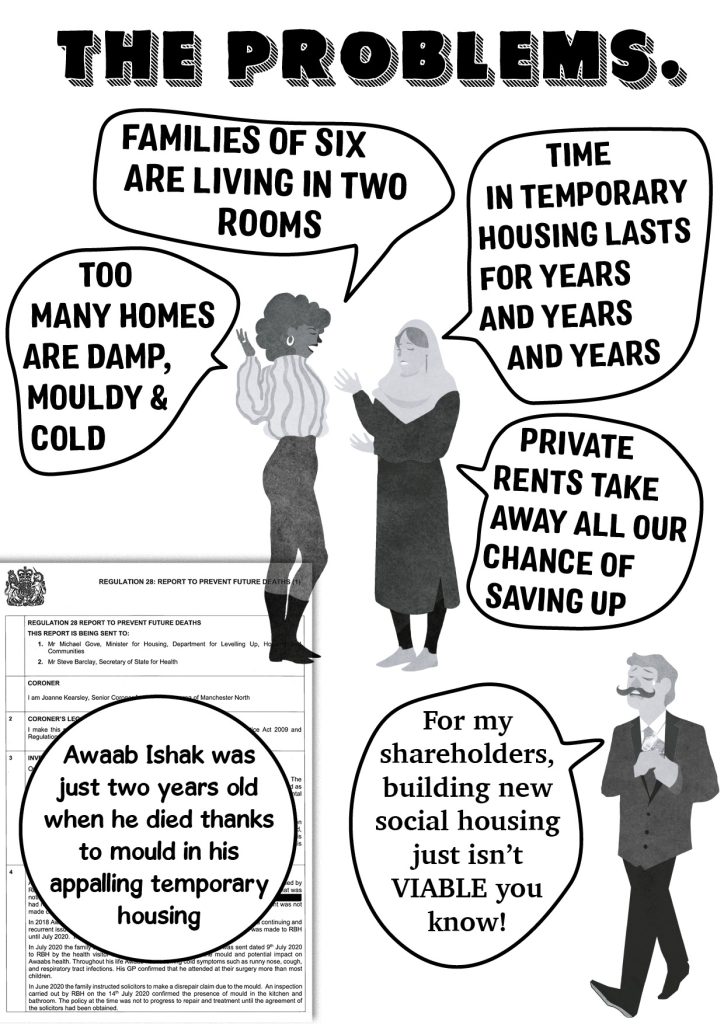
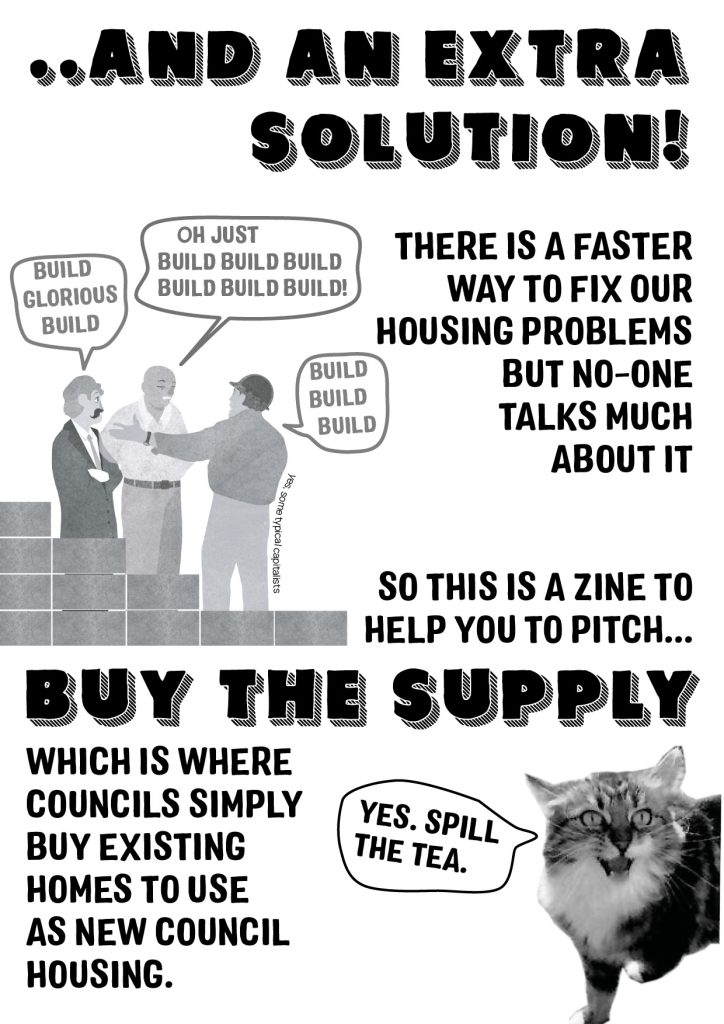
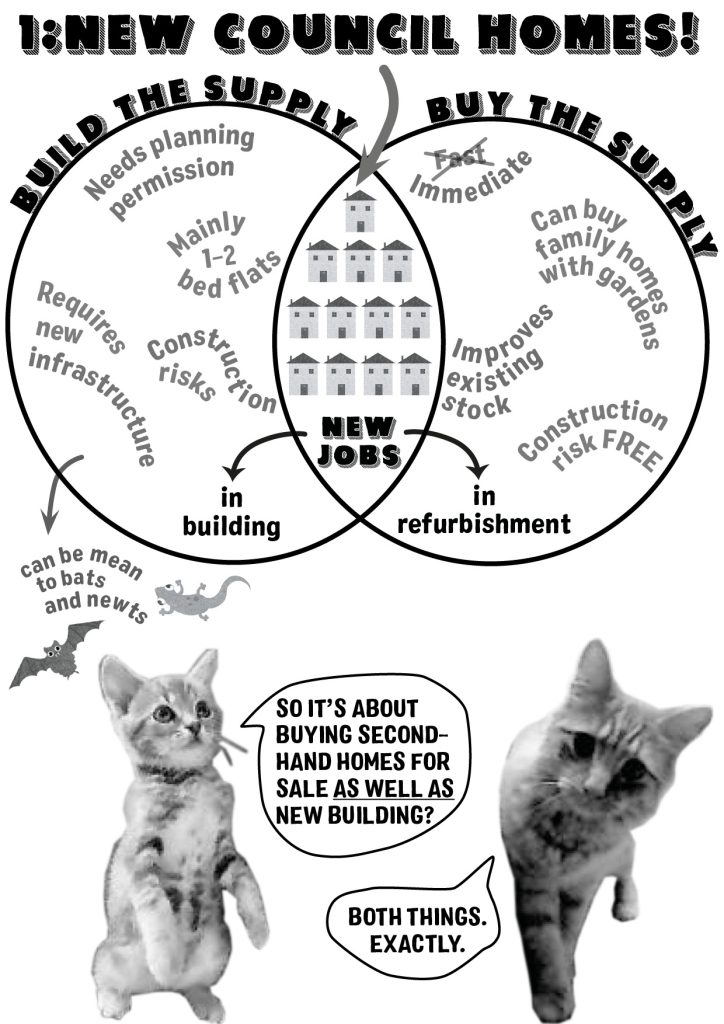
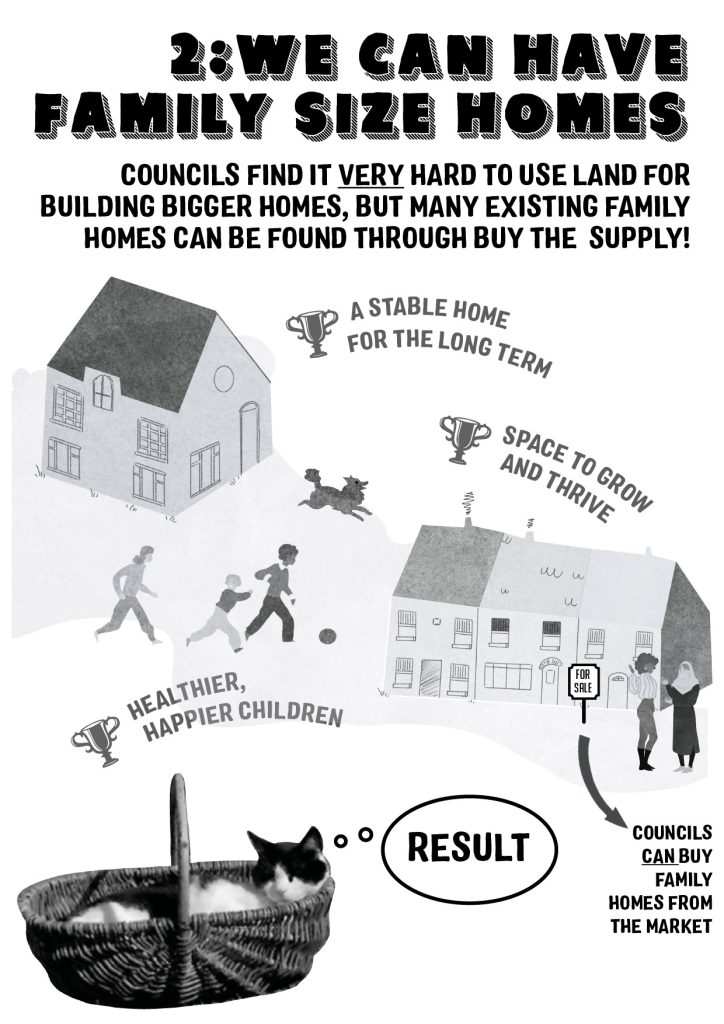
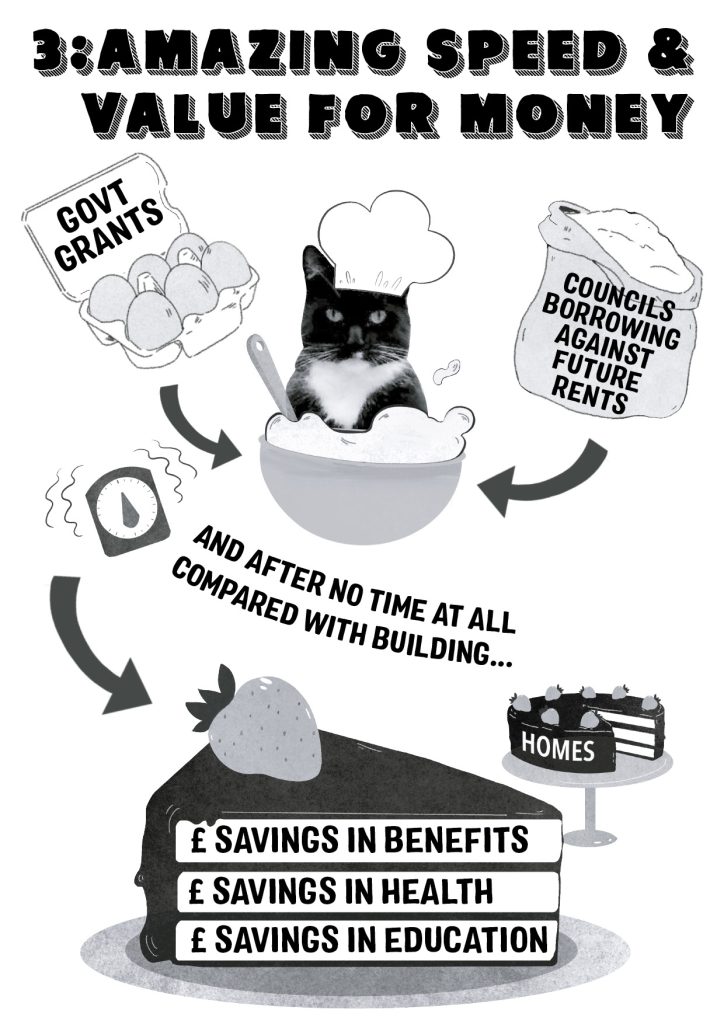
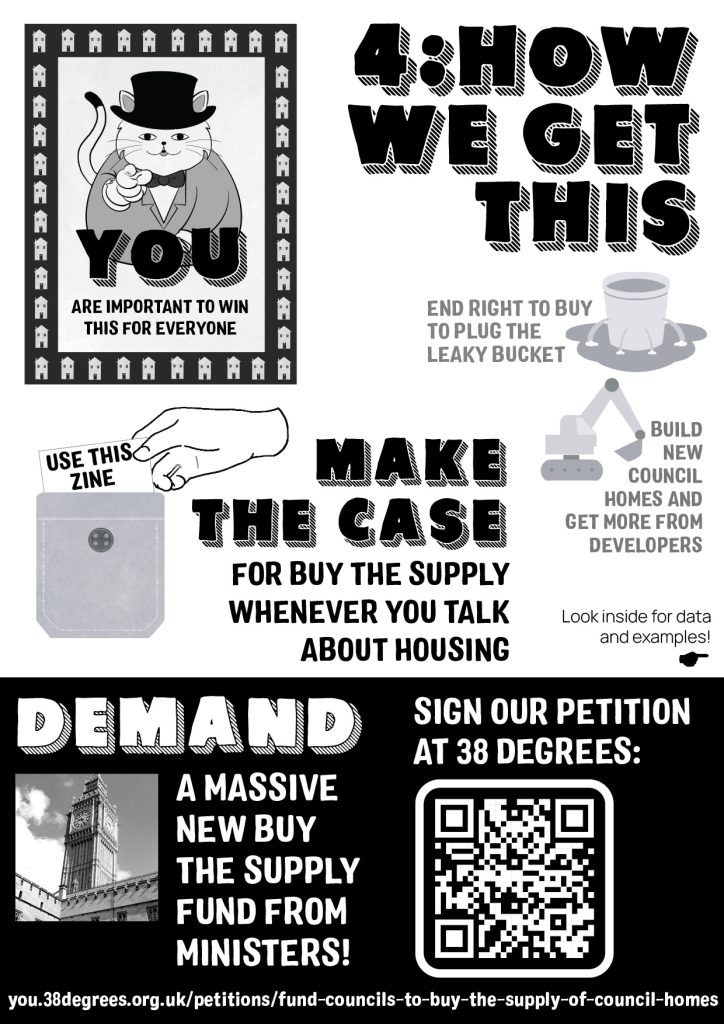

siGN AND SHARE OUR PETITION AT 38 DEGREES
Your signature is important to win this for everyone!
> PETITION: Fund councils to buy the supply of council homes

The case for Buy the Supply
Here are a number of key ways in which, through my work, I have already pushed for funding for council home acquisitions:
In January 2026, my letter to the Guardian made a concise case for the Government to fund Buy the Supply, in response to a report that landlords were feeling under pressure due to recognising renters’ rights under new laws. “My heart obviously bleeds…” >Labour should ‘buy the supply’ of housing from landlords. Guardian, 2026
Ahead of the 2025 Comprehensive Spending Review, the Green MPs wrote to the Chancellor making the case for funding council home acquisitions in a separate investment stream for local authorities, saying “your spending plans must do more to prioritise the creation of new truly affordable social housing, and to do this both by grants to support building social homes, and grants to help councils buy from the existing stock.” > Green MPs CSR submission, 2025
My earlier work in the London Assembly included an investigation and letter to the Mayor from the GLA Housing Committee in 2022, with me as chair, setting out how existing buildings can be utilised to provide more housing for Londoners, through methods such as buying back former council homes and buying on the open market. > Buy the supply – creating new social housing from existing homes. Sian Berry AM, 2022
This action from the committee followed proposals worked up for an official Green Party 2021 GLA budget amendment, which proposed buying homes outright from new developments intended for market sale, using unallocated housing grant money. This piece of work was an important proof of the principle of buying the supply to fulfill housing needs, and was focused on creating 2,000 homes affordable to key workers during the pandemic. > Read more about the Green GLA budget amendment 2021
After our budget proposals, the Mayor of London took action to make use of the hundreds of millions in unallocated grant money, devolved to him but in danger of having to be returned to the Government if left unused. Setting up the Right to Buy Back fund was a major new intervention and it helped create over 1,300 new council homes in London from existing homes. Grant was made available under this scheme to help councils, directly or within dedicated delivery bodies, purchase homes previously sold through the Right to Buy, as well as acquire other market properties. > What the Mayor is doing to increase council housing for Londoners, accessed 2026
I then pushed the Mayor to properly evaluate the Right to Buy Back fund results, and he commissioned the New Economics Foundation to look at the wider benefits of this investment, resulting in this report. > Buying Back Better. How social housing acquisitions in London can tackle homelessness and help councils avert bankruptcy. NEF, 2024
Later, in 2023, the Mayor announced a more ambitious target of 10,000 council homes to be bought under a new Council Homes Acquisitions Programme, using his new housing grant funding from Government alongside future ambitions for support from Government. I continued to question his team about this until I left the London Assembly in 2024, for example here:
There is a wealth of other evidence for the benefits of new social housing supply, through new building and – more quickly – through buying the supply from existing homes.
Here, the Smith Institute has set out how providing family homes, combined with a ‘chain maximising’ approach to allocations, making sure that families moving into newly provided 4-bed homes for example, have their existing council homes released to people in need of smaller homes, and so on down the chain. In a worked example based on a scheme for new family homes in Southwark, 48 households in total were helped to move through providing 10 new family homes, including 22 overcrowded households, 2 overcrowded households-within-households, 7 under-occupiers, 5 homeless households, and a number of families needing larger or more accessible homes due to medical and welfare needs. > Housing allocations and the vacancy chain. Smith Institute, 2022
The problems
Find out more about the problems that can be helped by funding councils to buy the supply:
Overcrowded families
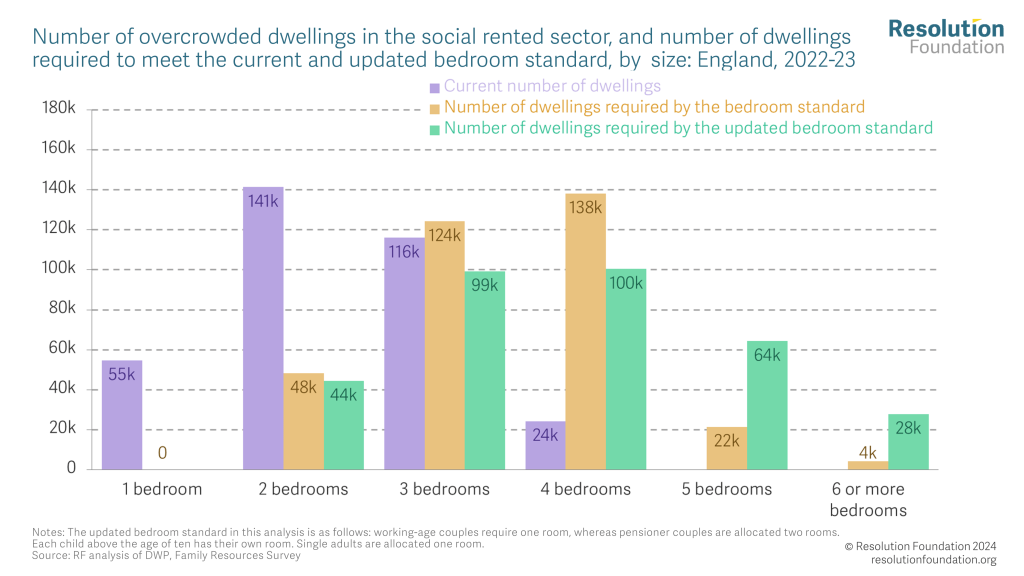
This paper from the Resolution Foundation in 2024 looks closely at data on overcrowding and under-occupation among different demographic groups and tenures and concludes that relieving overcrowding in the social rented sector would mean over 140,000 social rent homes of four or more bedrooms would be needed. > Housing Outlook Q4 2024. Resolution Foundation, 2024
This piece for the Royal Geographic Society emphasises the need for more social rented homes, and quotes a former Labour housing minister: “We shall be judged for a year or two by the number of houses we build. We shall be judged in ten years’ time by the type of houses we build” (Aneurin Bevan, 1947). > Understanding social and spatial patterns of overcrowding in England and Wales. R Coulter, Geography Directions, 2025
This call for research proposals from the National Institute for Health and Care Research outlines the many social and health problems caused by overcrowding and looks for solutions. > Healthy Homes: Overcrowding. NIHR 2024
Families stuck in temporary accommodation
Shelter reported another record number of homeless families stuck in temporary accommodation in 2025. The data showed that 169,050 children were now homeless in temporary accommodation in England – a 12 per cent increase in a year and the ninth consecutive record since December 2022. > Another record number of children homeless in temporary accommodation after 12% increase in a year. Shelter, 2025
The needs of these families are driving huge increases in costs to councils and leaving many local authorities in financial crisis. Here, the Local Government Association explains why councils aren’t being reimbursed by Government for the cost of expensive temporary homes. > Price tag of temporary accommodation to councils set to balloon to almost £4 billion by 2029/30 without action. LGA, 2026
Damp, mould and Awaab’s Law

This editorial in a Lancet publication sets out clearly the historical, policy and social causes of the awful death of 2 year old Awaab Ishak in 2020 due to mould in his housing association home, and his parents’ fight for justice and new policies. > Awaab Ishak and the politics of mould in the UK. eClinicalMedicine, 54, 2022
> The Guardian reports on the Coronor’s conclusions in the Prevention of Future Deaths Report in 2022
Here are some resources from the Housing Ombudsman about Awaab’s Law and the new rights people have to have health hazards in their homes dealt with.
In this statement he says: “We find some landlords not taking full responsibility, communicating poorly and making basic errors… our casework repeatedly shows that some landlords have been far too slow to remove potential hazards, with risks remaining for months or even years.” > Statement from Housing Ombudsman on Awaab’s Law, 2025
And this page of information and guidance is very useful on what the new law requires and what action tenants can take: > Awaab’s Law. Housing Ombudsman, accessed 2026
The slow, slow pace of new building
The Mayor of London’s Housing Delivery Taskforce included 26 partners from councils to private developers, and concluded that the market made social housing delivery too hard, and that Government needed to step up with more grant funding and more flexibility to allow for acquisition programmes and more focus on social housing building too. > Answer to written question. Mayor of London, 2023
This report by Shelter looks at the many reasons why councils and housing associations are finding it impossible to build new truly affordable social housing, including the lack of grant funding, the cost of land, and arbitrary rules on borrowing and subsidies. > Unlocking social housing. Shelter, 2022
EXAMPLES OF COUNCILS ALREADY BUYING THE SUPPLY
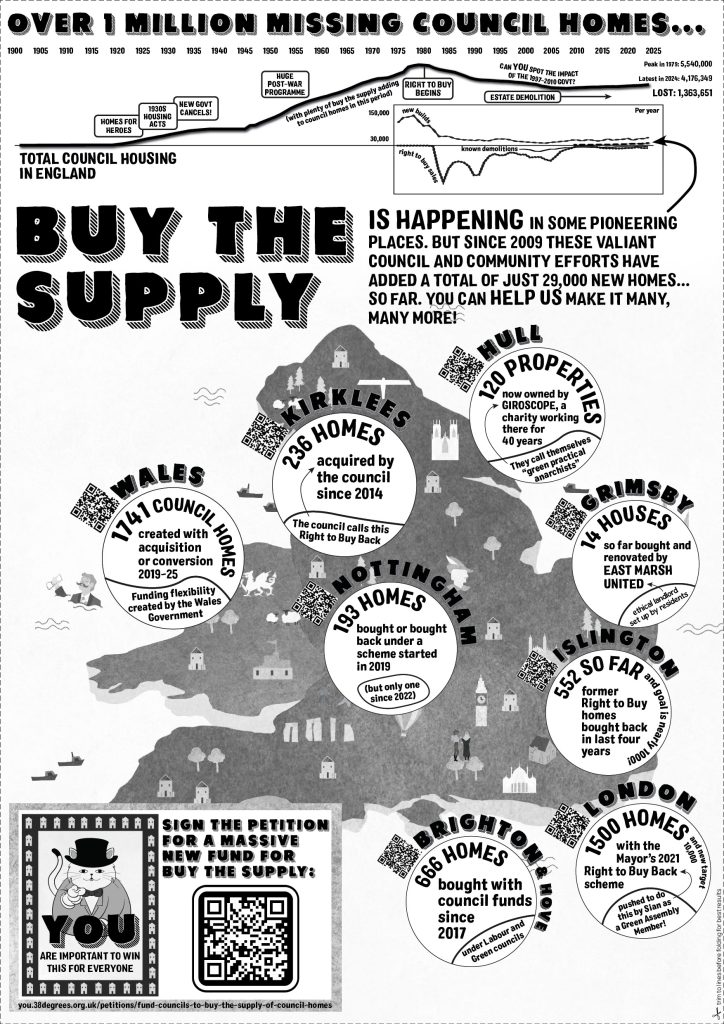
The examples from our Zine are just some of the places where councils, co-operatives and housing associations are already buying as much new social housing as they can afford from existing homes on the market and other strategies. These are great programmes that don't often make the news. Do you know if your council is already buying the supply? Or how many more homes could it add to its council housing stock if the Government would step up and help fund this idea properly?
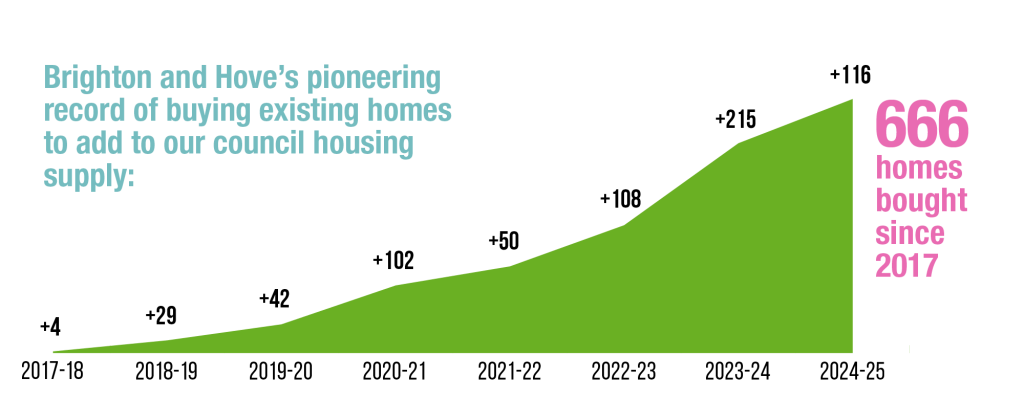
Brighton and Hove – 666 HOMES bought with council funds since 2017. Under Labour and Green councils. > Details from the council’s housing strategy
Data for this chart comes from the Government’s Local Authority Housing Statistics open data.
Grimsby – 14 HOUSES so far bought and renovated by East Marsh United (an ethical landlord set up by residents). > More on their website
London – 1,500 HOMES bought by councils with the Mayor’s 2021 Right to Buy Back scheme (and his new target is 10,000). The Mayor was pushed to do this by Sian and the Greens! > More about this in the Big Issue
Islington – so far 552 former Right to Buy homes have been bought back in last four years, and the council’s goal is nearly 1000. > Find out about the council’s plans
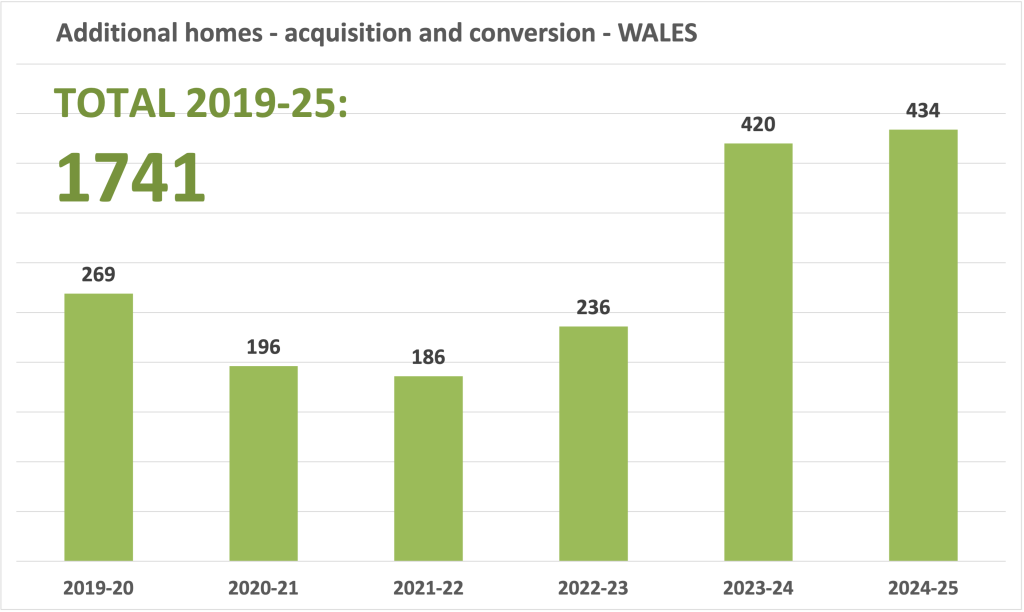
Wales – 1741 COUNCIL HOMES have been created with acquisition and conversion from 2019-25, using funding flexibility created by the Wales Government. > Dig into the Wales statistics here
Hull – 120 PROPERTIES are now owned by the charity Giroscope, innovating there for 40 years. They call themselves “green practical anarchists”. > See more on their website
Nottingham – 193 HOMES have been bought or bought back under a scheme started in 2019. > Read about it in Inside Housing
Kirklees – 236 HOMES have been acquired by the council since 2014 (the council calls this Right to Buy Back). > Details of the council’s programme in these cabinet papers